From Quantity Takeoff to Tender Submission: A Complete Guide
The full estimating workflow step by step: scope review, takeoff, BOQ, pricing, program, review and a tender your client can follow.
By Map Metra teamPublished 7 min read
A tender is only as good as the steps behind it. This guide walks through the full path from a set of documents to a priced, programmed and clearly presented submission, with the checks that catch most costly mistakes.
1. Review the scope before you measure
Read the scope of works, specifications, drawings and tender conditions first. List what is included, what is excluded, what is provisional and what information is missing. Note any pricing schedule the client requires — it should shape how you structure the estimate.
2. Take off the quantities
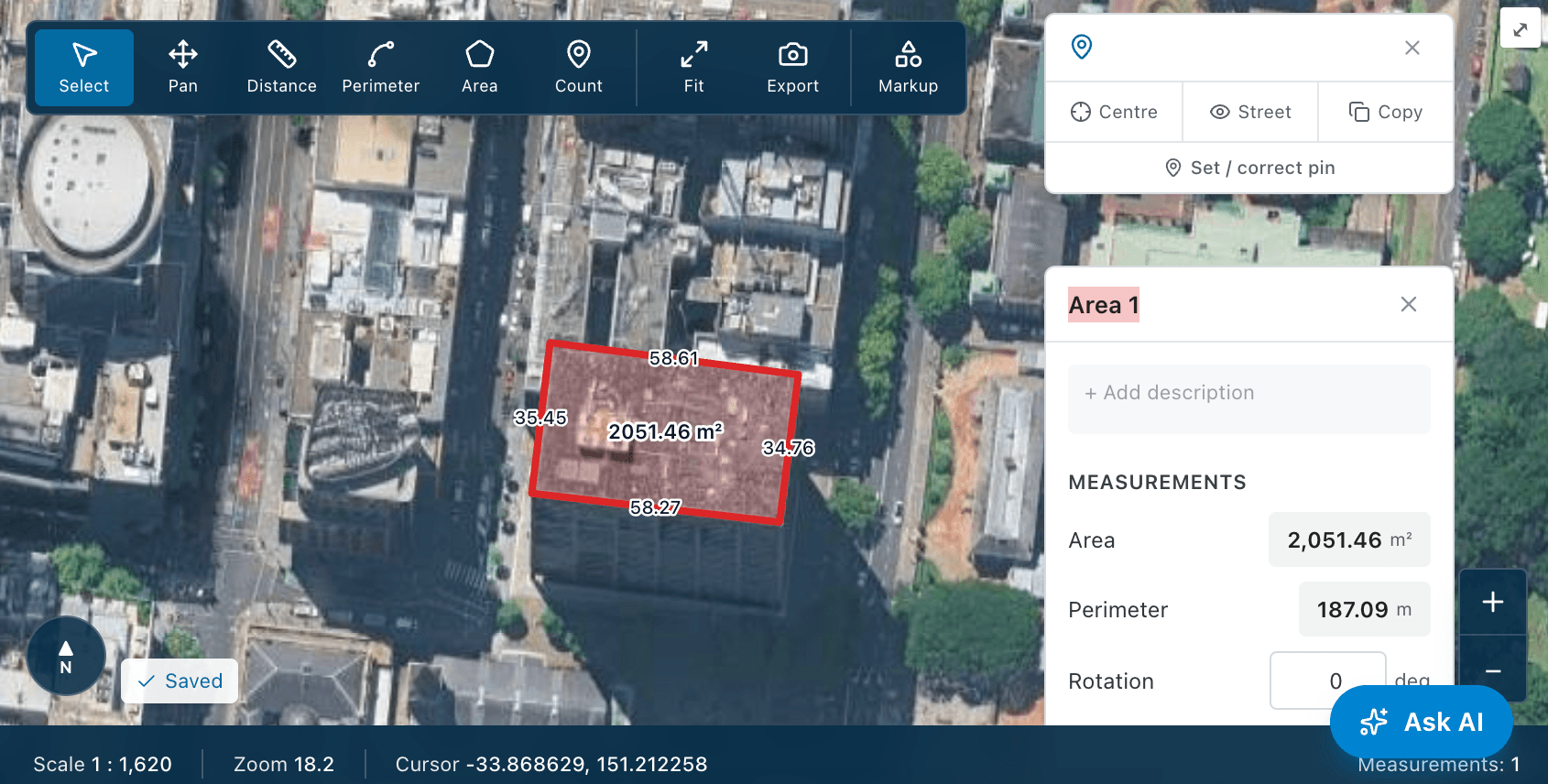
Measure each item in the unit it will be priced in: square metres, linear metres, each, cubic metres. Group the takeoff in a way you can check later — by level, area or trade — and record the source drawing for every quantity. Use aerial imagery for existing site elements and the drawings for new work.
3. Build the Bill of Quantities
The BOQ is the measured list of what will be built. Check units, look for missing items against your scope list, and make sure nothing is measured twice — for example a wall area and the blocks derived from it.
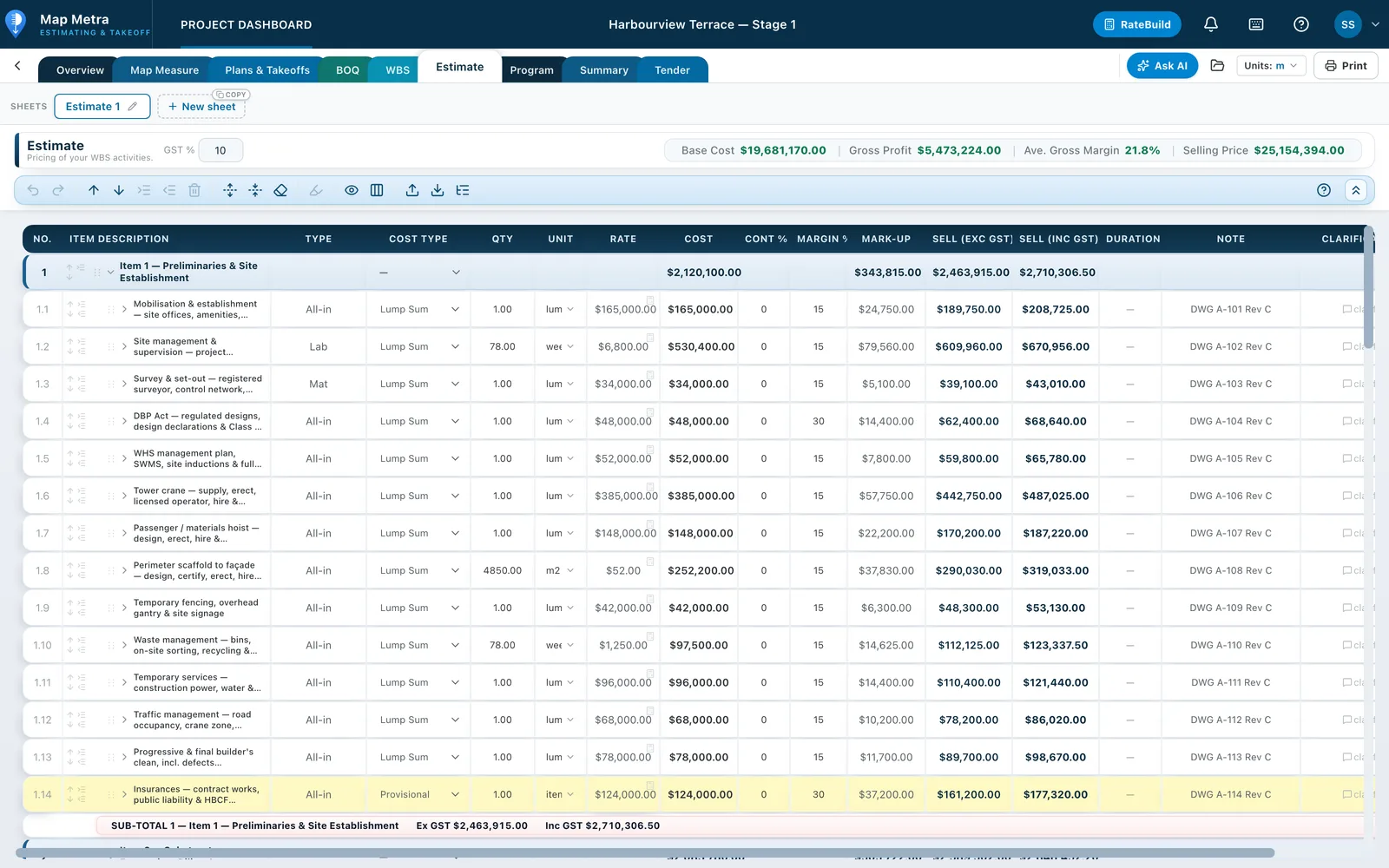
4. Structure and price the estimate
Organise the work into a breakdown that suits the job and the client's schedule, then price each line. Use unit rates for repetitive work, resource-and-time pricing for plant-driven operations and preliminaries, and subcontract quotes where trades price the work. Read more in Operational vs Analytical Estimating.
- Apply waste where materials are cut or lost.
- Add contingency for genuine risk, not for missing information you should have asked about.
- Apply margin and tax consistently, and keep optional items outside the contract sum.
5. Program the work
Turn the estimate into activities with durations and dependencies. The program confirms the job can be built in the time allowed and keeps time-related costs — supervision, site establishment, hire — consistent with the durations.
6. Review before you submit
- Does the priced breakdown add up to the tender total?
- Is tax calculated correctly, and are provisional sums counted once?
- Are optional items clearly shown as excluded from the contract sum?
- Do clarifications and exclusions match the assumptions in your pricing?
- Has someone other than the estimator checked the largest items?
7. Present the tender
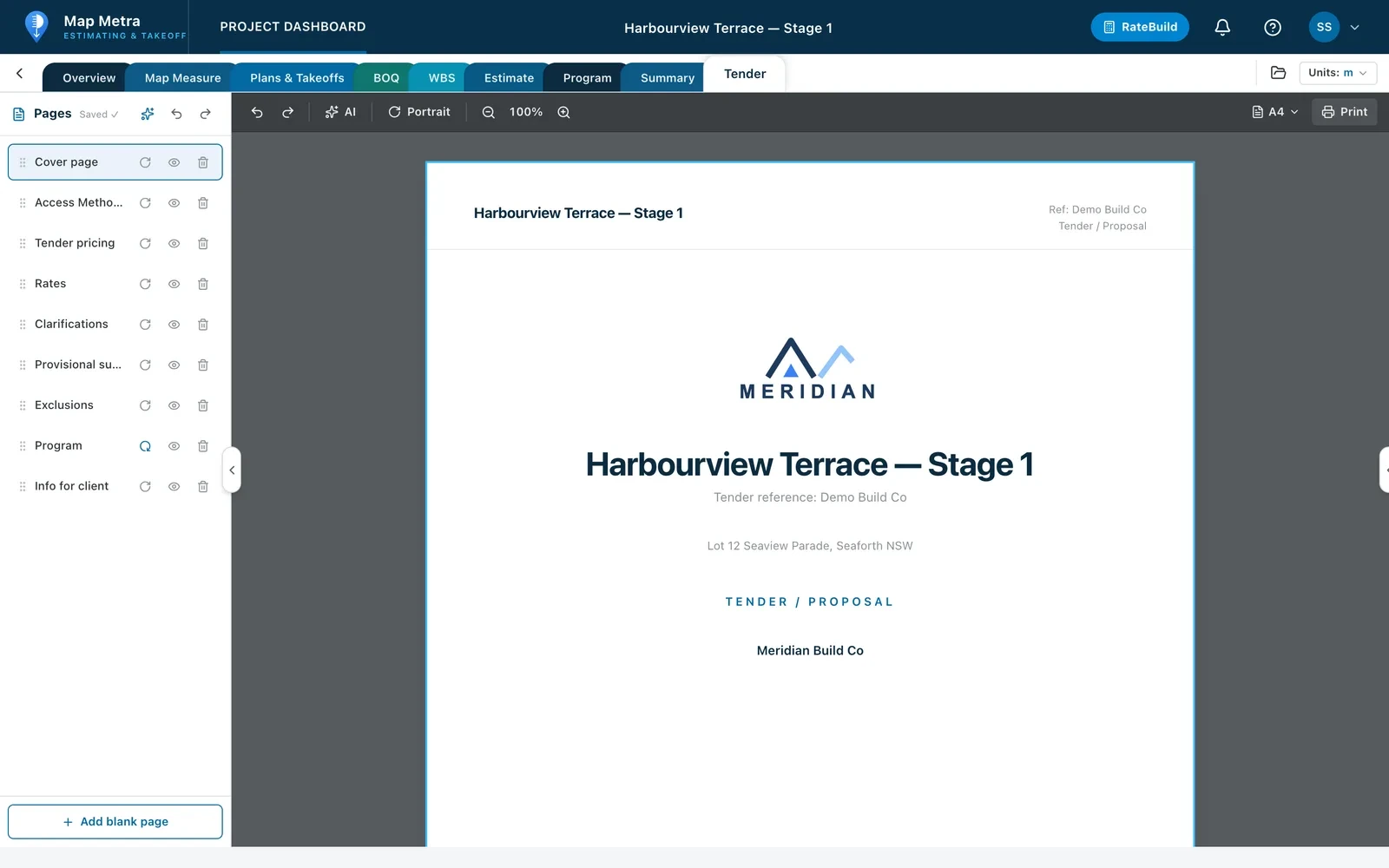
Your client should be able to follow the price. A strong submission includes a cover page, scope summary, priced breakdown at an appropriate level of detail, program, clarifications, exclusions, provisional sums, insurances and licences — branded consistently.
Map Metra connects each of these steps in one project, from Map Measure to Tender & Reports, so quantities, prices and program flow into the tender without re-entry.